My Little Indie Studio: the product portal
Every Chrome extension needs more than a store listing: a landing page, docs, privacy and terms, welcome and uninstall pages, a way to sell and validate a licence. Fourteen products each building their own would be fourteen half-finished sites.
The problem
A browser extension lives in a narrow store listing, but its users need a place to learn what it does, read the docs and the privacy policy, get help, buy a licence and tell the developer why they uninstalled. Repeating that for every product does not scale.
What was built
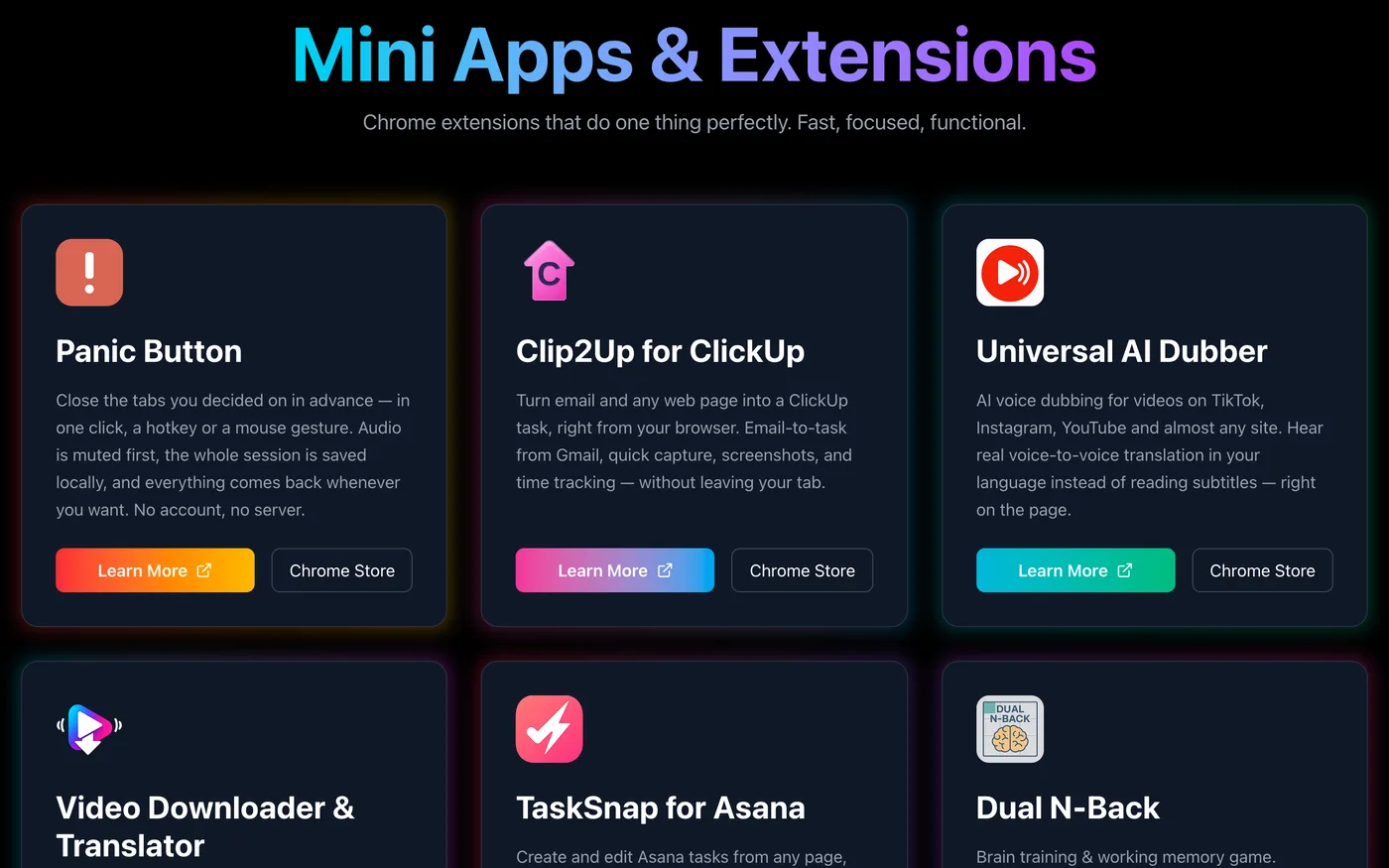
- One portal listing 14 products — Chrome extensions, an Asana plugin and two web apps — with product and support pages.
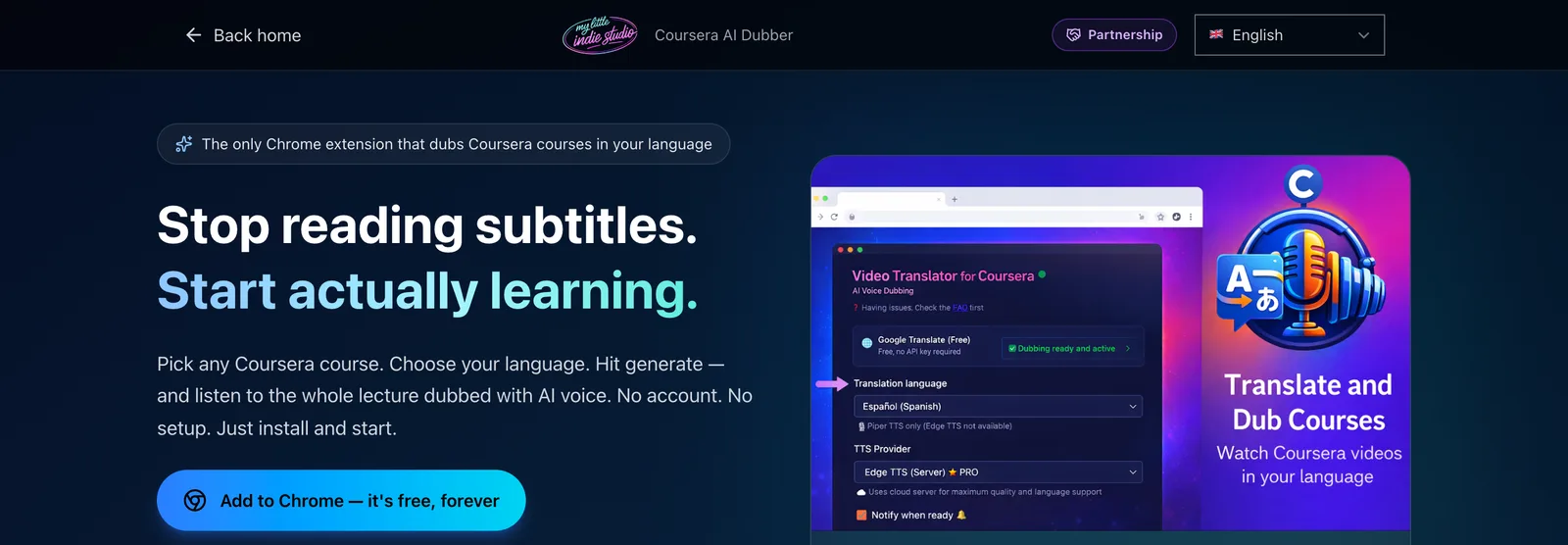
- Per-product welcome, pro, docs, uninstall and feedback pages, plus privacy, terms, refund and cookie policies.
- Support and uninstall-feedback APIs the extensions call directly.
- Licence management with per-product validation endpoints, and payments through Lemon Squeezy, CryptoCloud and Dodo Payments.
- The interface ships with 53 locales.
Evidence
As counted on 9 Oct 2026: 14 products on the portal’s homepage and 53 locale folders in the application. The product pages and policies linked from the extensions’ store listings are served from this portal.
Status and limits
Live and maintained. My Little Indie Studio is where most of the products were first published; Shelf Compass now presents the same work, and the portal keeps serving the product pages, policies and licences.
- Audience
- Users of the extensions and apps — before install, after install and when they need help
- Stack
- Rails 8, React 19 + TypeScript via Inertia.js, Tailwind CSS 4, PostgreSQL, Sidekiq, Kamal
Web applications and browser extensions are studio services — see the service