VettedGaps: pains people already pay to fix
Upvotes tell you a complaint is popular — not that anyone will pay to make it stop. VettedGaps checks every pain against evidence of money already changing hands.
The problem
Idea research usually stops at popularity: a thread with many upvotes looks like demand. But a popular complaint is not proof that anyone pays to solve it, and building on that signal is how indie products end up with users who will not buy.
What was built
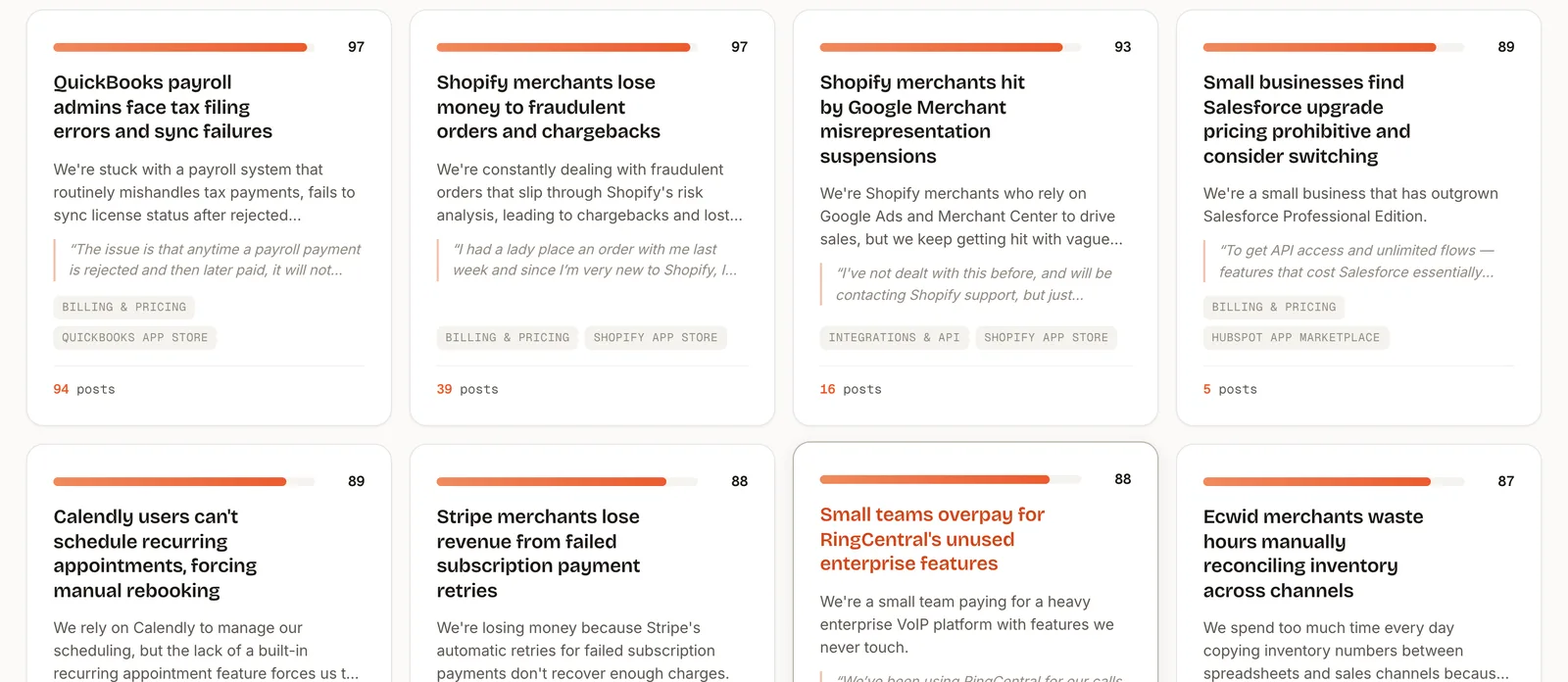
- Pain cards: user frustrations collected from public threads, clustered and scored, each shown with a summary and a verbatim quote from its source.
- Every pain matched against Fiverr paid orders, Google search demand and the competitors already selling a fix.
- Chrome Web Store research: a catalog of extensions and feature-level opportunities mined from their reviews.
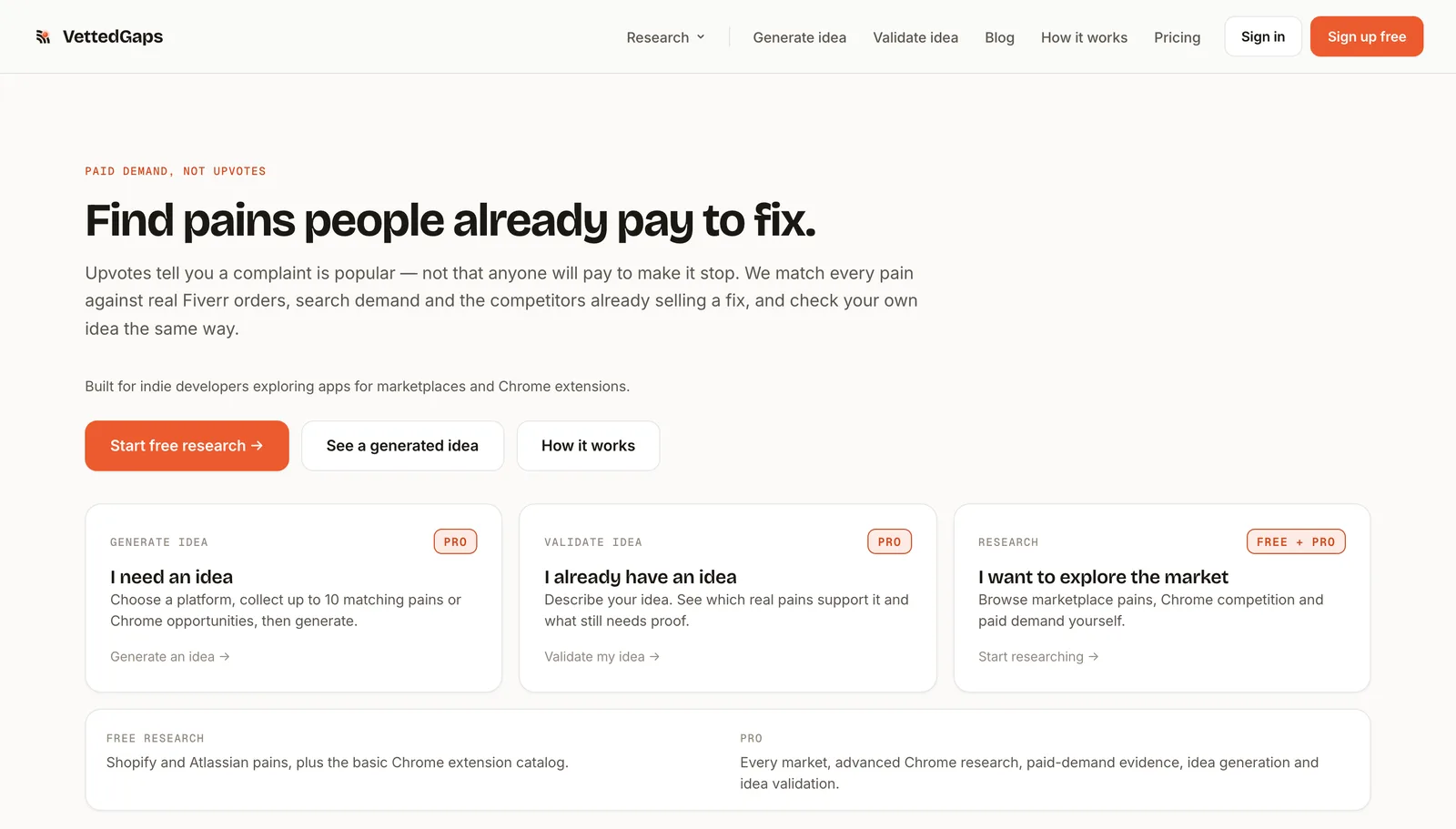
- Generate an idea from selected pains, or validate an idea you already have against the corpus.
Evidence
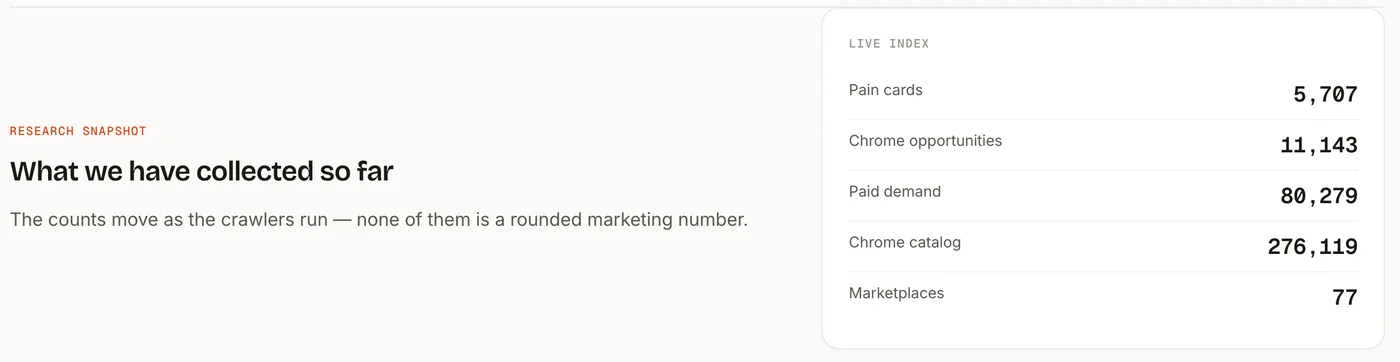
As shown on vettedgaps.com on 9 Oct 2026: 5,707 pain cards, 11,143 Chrome opportunities, 80,279 paid-demand signals, a Chrome catalog of 276,119 extensions and 77 marketplaces under observation. The site notes that the counts move as the crawlers run.
Status and limits
VettedGaps is live. Free research covers Shopify and Atlassian pains and the basic Chrome extension catalog; every other market, advanced Chrome research, idea generation and validation are part of Pro. It reports evidence of demand, not a guarantee that a product will sell.
- VettedGaps — Shows which user complaints people already pay to fix — each pain matched against paid orders, search demand and existing competitors.
- Audience
- Indie developers exploring apps for marketplaces and Chrome extensions
- Stack
- Rails with Inertia.js + React, PostgreSQL + pgvector, Redis/Sidekiq, Python asyncio crawlers, Kamal 2
Custom web applications are a studio service — see the service